


Why isn't my sterling silver flatware and hollowware worth closer to 92.5 percent of spot silver when I go to sell it?

Updated: Sep 23

Why isn't my sterling flatware and hollowware worth closer to 92.5 percent of spot silver when I go to sell it?
When I contacted several stores to sell my sterling silver flatware which is 92.5% silver, I was expecting to get an offer close to Spot Silver less 7.5% and unfortunately the offers were far below that. With my pure silver .999 coins and bullion I get pretty close to spot silver price when I go to sell. Why not more on sterling silver flatware?
Sterling silver flatware is not easy to trade like how silver bullion coins and bars are. When you have a .999 fine bar or coin you can take it to any coin shop in the country and get maybe 4-10% below that spot silver price depending on the bar and coin and on the current market conditions. These bullion pieces trade almost as easily as how currency does when you are visiting a foreign country and converting from one currency to another.
The dealer after buying the bars and coins can then immediately sell these pieces to their own retail customers. The dealer can also flip these silver bullion items to large distributing wholesale trading networks that allow the dealer to lock in the sell price immediately which guarantees no downside exposure or risk of loss due to a market tumble.
Unfortunately, with sterling silver flatware and hollowware items they can't be traded instantly. Assuming the flatware is just a scrap pattern with no antique resale value, the flatware needs to be first refined at a refinery and then converted into easily tradable coins or bars. The cost of these refining services is not cheap. The refinery will charge between 8-15% for their fees depending on the current market conditions. Plus the bulkiness and weight of the silver to ship into the refinery will add another 1-2% as well to the dealer costs. If there are knives involved, this is another expense as they will need to be hammered out and the small amount of silver in the handles separated out from the stainless steel blades.
These refinery lots also have to be done in large batches of 1,000+ troy ounces or more to make it cost efficient for the dealer. Each batch that is smelted has a huge initial set up cost, so if there are only 100 pieces of flatware refined at one time, the initial set up fee will eat up at least half of that in expenses just right off the bat. A dealer buying scrap flatware patterns will have to send off very large batches in order to make it cost efficient. It may take weeks or months till the dealer has a large enough batch to ship off. Plus, the refineries take on average 7-8 weeks after they receive the batch to process it. From the beginning to the end of a purchase a dealer may have to wait up to 4 months before getting paid. This is an absolutly huge carrying cost that needs to be accounted for by any dealer buying sterling flatware and hollowware.
Worse yet, there is no lock in option for dealers selling flatware or hollowware. If a dealer purchases a set of silver flatware from a customer and then it takes four months to get paid by the refinery, the dealer has absolutely no way of knowing in advance what that future spot price of silver will be at that later settlement date. If the price of silver tumbles down the dealer eats that market loss. This is also another major carrying cost factor that the dealer needs to price into the equation when buying scrap quality sterling flatware and hollowware.

Because of all of these expenses, most coin shops, antique stores, pawn shops and jewelers that handle buying precious metals will typically have pay around 50-60% of spot silver when buying your sterling silverware and hollowware. That is almost a 30+ point spread compared to a 5-10 point spread on bullion coins.
Here are the numbers on why you can't get close to 92.5% of Spot on Silverware: The dealer only receives out of the: 92.5%: Less: 12.5% Refining & outbound shipping costs Less: 3% Financing or Opportunity Costs on carrying the items for 4 months till paid Less: 2% Risk Factor Costs on silver market volatility - customers pile on and sell more frequently when there are peaks in the market, so the law of averages would tend to favor the customer and the dealer would come out behind on all overall transactions that settle in the future (it doesn't all even out for the dealer due to the customer tilt.)
Less: 5% Overhead store and employee time costs of intaking silver and readying outbound shipments to refinery
-----------------------
Gross Net Profit after expenses: 70.00% Less Cost of goods sold if bought at 60.00% of Spot ----------
Dealer projected net profit: 10.00%
Even though when you go to sell your sterling flatware or hollowware at only 60% of spot silver (or lower) it initially appears that the dealer is raking you by making a 32.5 point spread, that is just simply not the case. With all the additional expenses involved, the dealer is only making a reasonable fair profit and is by no means getting rich off of sets of silverware.
Calculations Conclusion: Scrap Sterling Flatware Patterns are not as easily tradable as common .999 coins and bullion. Please have a more realistic expectation when you are trying to dispose of your sterling flatware. You will not be paid as high a rate as you would be with silver coins and bullion due to the many extra steps of the dealer having to convert the scrap .925 flatware to .999 refined bars or coins, which costs the dealer a lot of extra money in order to do so. Alternative Options to Sell Scrap Silverware: Ebay & Etsy: - Some say, "We will just try selling our silverware for full melt value or more on Ebay, Etsy or Ruby Lane." Good luck on that!! Most buyers on Ebay, Etsy and Ruby Lane are super tough and are not paying any where near melt silver prices even on some of the better patterns like Grande Baroque or Francis 1. Even if you got let's say 80% of spot silver instead of the 60% that a coin, jewelry, pawn or antique shop would pay, you'll still be docked 15% by ebay for their selling fees which after that you'll be brought down to 68%. Plus, you'll have the hassle of running your own business, selling in multiple shipments, dealing with picky customer returns and all your time and effort spent for doing all those photos and descriptions for all your listings. It may also take weeks, months or even years before you sell off every last piece on Ebay, Etsy, Ruby Lane and all the other on-line selling platforms for used merchandise. Making an extra 8% might not be worthwhile for all that hassle. Plus, unless your silverware is in pristine like new condition, you can't just sell tarnished unpolished silver on these platforms, customers want the pieces to be shiny and ready to use, so you'll either have to do a lot of of hand polishing yourself or send the pieces out to get polished which will be a minimum of $6 a piece to have professionally re-finished and done to look like new. If you have to incur the polishing expenses any hopes for a profit are going to evaporate pretty quickly, You might end up only making $5 per hour or less or even go negative for all your extra time, effort and trouble when all things factored in. Ebay is not worth it to try and sell scrapier patterns in our opinion, we've definitely not had the best of luck going that route ourselves. You'll likely be scratching your head in the end if you go the Ebay/Etsy route on run of the mill patterns wondering why you didn't just sell it all in one shot to a reputable bullion dealer.
Refinery: Selling directly to a refinery - When you Google selling sterling silverware, there will be some results that show refineries that have on-line calculators on how much money your silverware is worth based on scrap and they typically show a modest percentage below melt value as a result. However, buyer beware on these. The on-line "estimates" are typically come ons and don't always list out all the expenses that they will tack on and by the time you are finished and done you might up end up getting a lot less than even the 60% of spot, espeically if your lot of silver is a small quantity. Any refinery stating that they are going to pay you near full melt on your silverware is basically telling a mistruth or lying by omission by leaving out key factoring expenses that end up docking down the real actualized net percentage that you will receive. You also have zero chance of getting any antique silver value on any of your items by going with a refinery. There could be a Paul Revere Spoon in your lot worth $10,000 per troy ounce, but there will be zero chance of it being rescued for historical or antique resale purposes if you sell to a refinery. Most major refineries don't want to deal with the public and rely entirely on large bulk shipments from pawn, jewelry, coin or antiqe shops that sell to them large loads of 1,000+ ounces at a time. If you find a refinery that claims to buy direct from the public, make sure to question them on the breakdown of all the expenses that they intend to charge you on the net net yield of your batch.
Auction Houses:
There are many auction houses the larger ones being Christies, Sotheby's, Heritage Auctions as well as a plethora of small to mid-level auctioneers as found on LiveAuctioneers.com.
Yes, you can definitely receive full melt or even beyond that in some cases for better patterns, however, just keep in mind that the hammer price is not the actual net price that you will receive. Most auction house take 40% off the top (Buyer's Premium of 28% + 12% sellers percentages, expenses and fees.) So if your set sold for full melt at 92.5% you will only net 55.5%. Why bother going to all that trouble to mail your set off your silver set and wait 4-6 months for the auction to take place and receive less than what you could had received at a pawn shop? You also will have the uncertainly of knowing what the metals prices will be a few months later. Silver could take a big drop. Even popular patterns like Francis 1, Grande Baroque, Chantilly, King Richard, Strasbourg, Buttercup, Eloquence, Repousse and others only typically go for a hammer price of only scrap or just slightly above it. Do the research on "sold items" at these auction house before entrusting them to sell your silver patterns. Unless you have Tiffany, Georg Jensen, Buccellati or some other high end pattern, you're likely not going to do any better consigning your bulk silver flatware sets to auction house than you would had just selling to a direct buyer.
Best Place to Sell Your Silver:
Selling to The Silver Museum aka Sterling Silver Buyers - You probably will do better dealing with an antique silver company like ours at The Silver Museum LLC and Sterling Silver Buyers where we always try to squeeze out any possible value for vintage antique resale value versus a coin or pawn shop which will usually only pay based on metal value only and a lot of times trying to even get 60% of spot out of these types of precious metals buyers might be being hopeful and optimistic. We've had many of our customers tell us 45%-55% of spot is not an uncommon offer rate from these smaller outfits. Some go even lower. At the Silver Museum, even if your set is scrap, we always try to pay the top of the going market rate. You can also sell everything in one shot and be paid by us immediately, no waiting for a consignment shop to sell your items or having to put up with the hassles of selling on-line in dribs and drabs.
Note on Market Volatility: If there is an abnormally high spike in silver prices and silver shoots up 10-40% in a 1-4 week period, most dealers will definitely lower their percentage rate of what they pay on purchasing silver. So if they normally pay 60% of spot, it might temporarily only be 45-55% of spot, and that is because when the silver market is extremely volatile, no dealer wants to be caught buying silver at the peak of a flash in the pan and then suffer the loss of a huge gap down. When these market spikes occur dealers will either temporarily stop buying sterling flatware and hollowware or they will build in a "cut rate" to help them offset any potential and often anticipated downturn or correction in the market.
In January of 2025, silver plummeted 40% in one day from $119 per troy ounce down to $71. Prior to that, silver had gone up almost quadruple from the $30 per ounce range from just a few months earlier. When markets conditions are turbulent and erratic like this, percentages paid on silver by dealers to customers can change even on a daily basis. Our 60% of spot formula, is going to be usually pretty accurate when silver prices are stable or constant over a long period of months or years. It is also possible that if silver stablizes at a certain benchmark and floor over a period years, that the 60% of spot buy price could increase once people are more confident that the bottom won't drop out of the market and that when a dealer buys a set of silverware that he or she will likely be selling it at near the same market spot price that they originally paid on it. Refineries also charge dealers less refining charges when there is market stability as well. Stability in the silver market is good. Instability with the silver price is generally a bad thing and creates a lot of confusion for customers and fears, stress and frustration alike for dealers trying to navigate through it all with an ever changing business model and constantly changing formula calculations.
Was the worst when most refineries shut down all production of silver in late January of 2026 and many dealers were faced with no where to sell the silver that they were buying - talk about a cashflow nightmare! Those were a tough few months afterwards, but fortunately many refineries are back open now for business, however, the good old days of them working tight on margins are over and most refineries are charging a substantial amount more than they had previously which ultimately has contributed to the lowering of the percentage of spot on how much a dealer can pay to a customer and still make a profit. Final Words: Hope the above article helps explain to you why your more common grade sterling flatware and hollowware is not worth anywhere near the 92.5% of spot silver. It could still be worth close to that if it has antique or market resale value, feel free to email us your photos and inventory lists for our fair offers. We will let you know either way if you have a big antique silver value winner or if it is just a silver bullion market play. We always try our best to not scrap anything out, but if it a pattern that no one wants, it may be unfortunately the best and only option. Whereever you end up selling your scrap silver, we wish you the best of luck and hope that the transaction or transactions go smoothly for you.
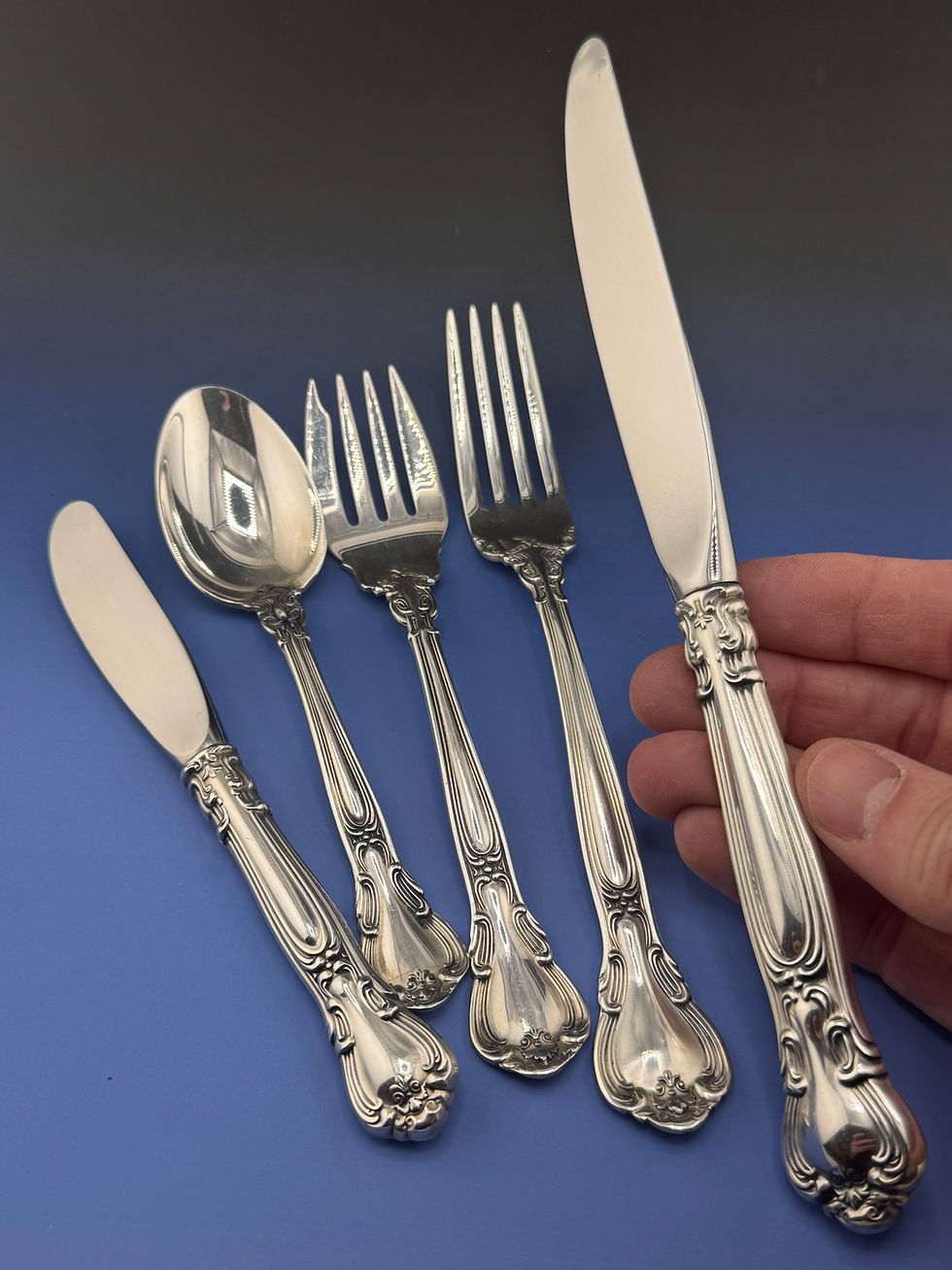
The Silver Museum LLC Buys all Silver!
We want to purchase all silver items!
If you have items that you'd like to sell,
or even just want to get an idea on valuation
please click the email us button for a quote.
Please send us photos, measurements and item descriptions.
If local in Utah, make an appointment to bring it in.
Thanks,
Greg Arbutine
Silver Museum Owner


The Silver Museum buys all silver regardless if it is rare or not. We want it all!
Please sell your silver to The Silver Museum!
Please get our offer no matter what else you eventually do.
We are always looking for great silver pieces for our Museum.
Last major update on this article was on 9-23-26


Comments